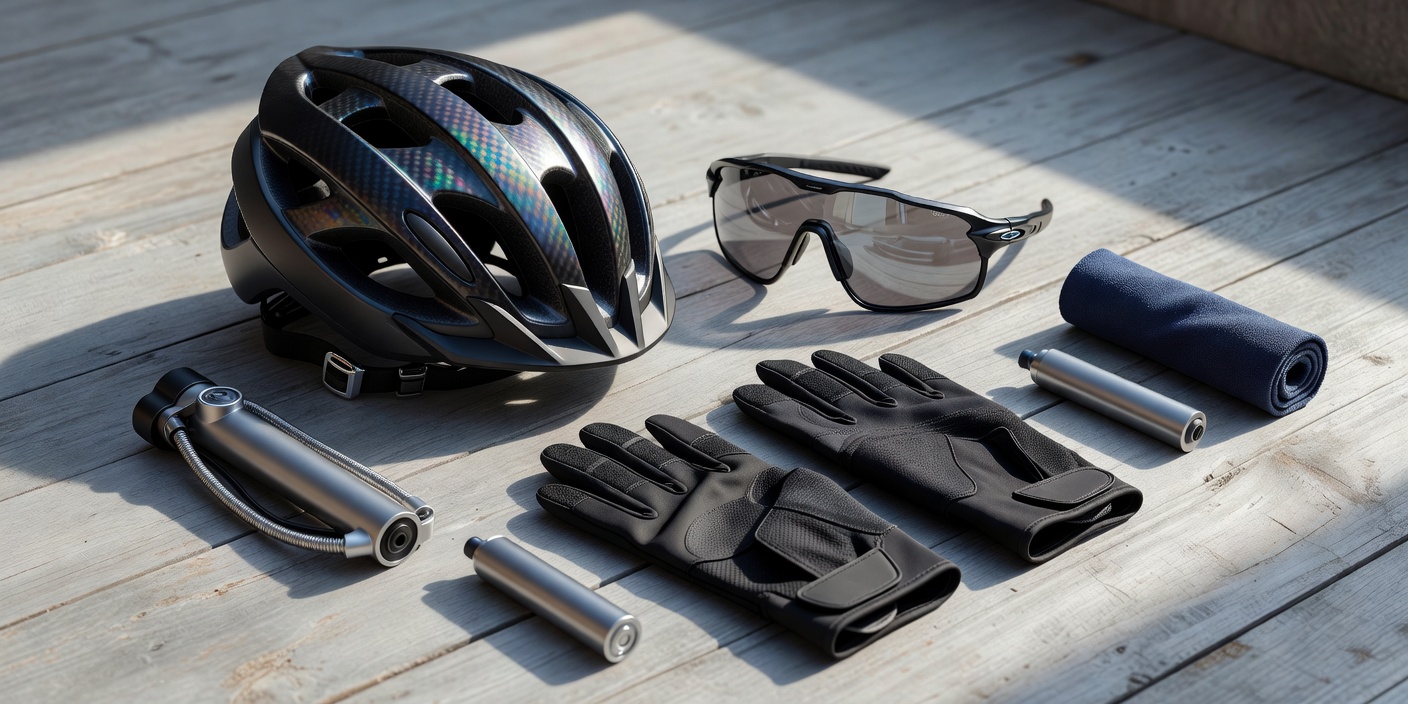
Helmets: Non-Negotiable Safety
If you only buy one piece of cycling gear, make it a high-quality helmet. Modern helmet design has evolved significantly past simple foam shells. Look for helmets that incorporate rotational impact protection technology. These systems allow the outer shell of the helmet to slide relative to the head upon angled impact, significantly reducing rotational forces on the brain.
Fit is equally crucial. A poorly fitted premium helmet offers less protection than a perfectly fitted budget model. The helmet should sit level on your head, roughly an inch above your eyebrows, and should not shift when you shake your head.
Cycling Clothing: The Comfort Factor
Riding in jeans and a cotton t-shirt is fine for a three-mile commute, but over longer distances, purpose-built clothing is a game-changer.
The Bib Short Investment
Bib shorts—lycra shorts held up by shoulder straps rather than a waistband—are the cornerstone of cycling comfort. The lack of a waistband prevents the shorts from cutting into your abdomen when leaning forward. The most critical component of the short is the "chamois," the padded insert. A good chamois uses multi-density foam to support your sit bones while relieving pressure on soft tissue. Note: you do not wear underwear beneath cycling shorts; doing so causes the chafing the shorts are designed to prevent.
Jerseys and Moisture Management
Cycling jerseys are cut longer in the back to maintain coverage when bent over the handlebars. More importantly, they are made from synthetic fabrics or merino wool blends that actively pull moisture away from your skin to evaporate, keeping your core temperature regulated. The rear pockets provide convenient storage for snacks, your phone, and a repair kit.
Footwear: Flats vs. Clipless
The pedal and shoe interface is where your power transfers to the bike. You generally have two choices: flat pedals or "clipless" systems.
- Flat Pedals: Best for absolute beginners, commuters, and extreme mountain bikers. Paired with flat, sticky-soled cycling shoes, they offer good grip while allowing you to put a foot down instantly without un-clipping.
- Clipless Pedals: A confusingly named system where a cleat on the bottom of the shoe mechanically clips into the pedal (they are called "clipless" because they replaced older toe-clip cages). These systems secure your foot in the optimal pedaling position and prevent slipping during hard efforts. They require a learning curve, but most road and cross-country riders consider them essential.
Essential Accessories
Beyond what you wear, a few accessories attached to the bike are vital. High-visibility daytime running lights are arguably as important as a helmet for road riders. A saddlebag containing a multi-tool, tire levers, a spare inner tube, and CO2 cartridges ensures a minor mechanical issue doesn't result in a long walk home.
Conclusion
Start with the essentials: a safe helmet, comfortable bib shorts, and a basic repair kit. As you ride more, you will discover exactly what additional gear—like specific winter clothing or clipless pedals—will enhance your specific style of riding. Invest in quality where it touches your body (hands, feet, and saddle area) and save money on the rest.